
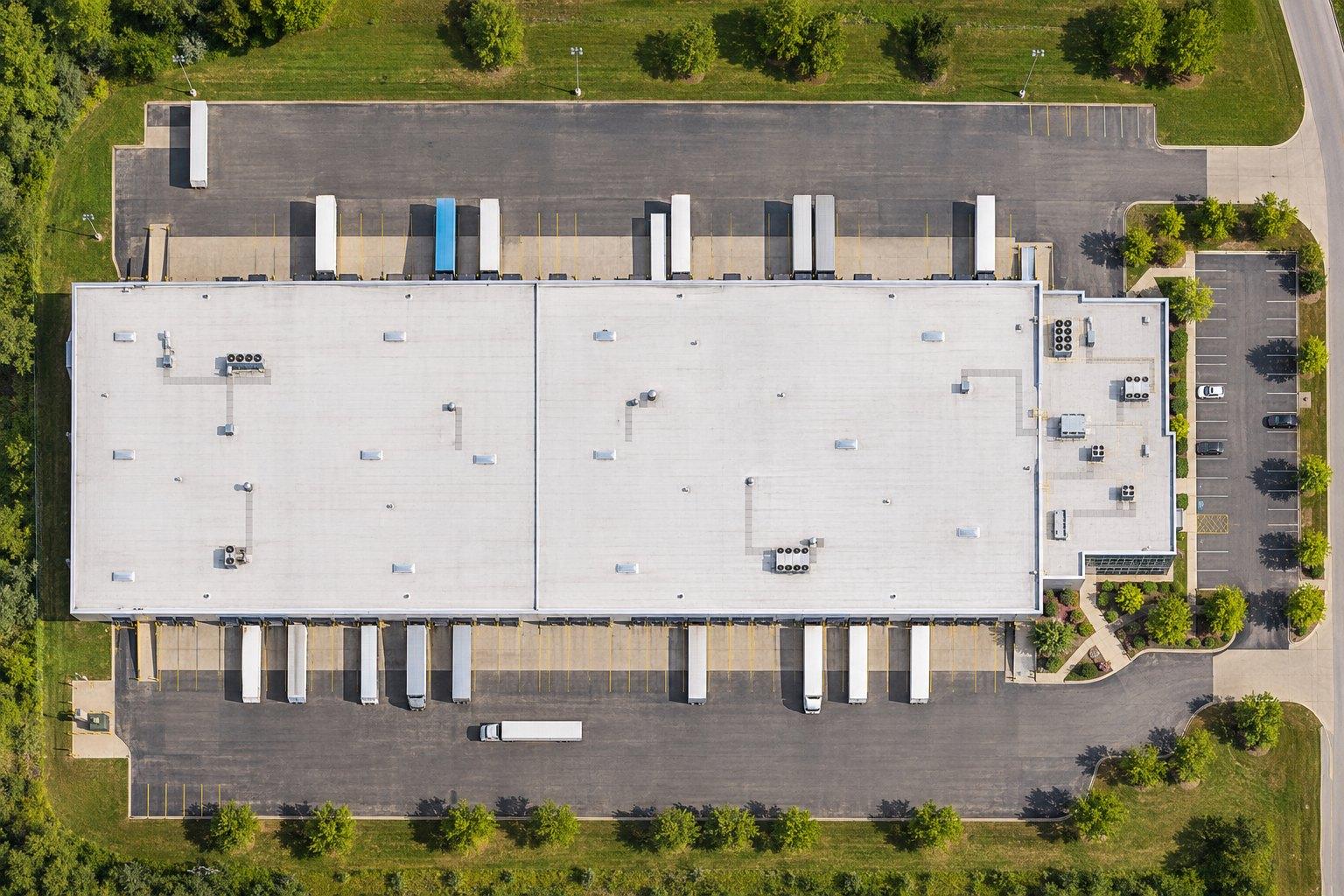
Big roofs over work that cannot stop.
Distribution centers, cross-docks and plants put acres of membrane over racking, inventory and automation. A leak there costs far more than the repair. We keep every roof area on record, catch problems while they are small, and plan the big spend years ahead.
Where big roofs fail first.
Most leaks on large low-slope roofs start in a handful of places. Every visit walks each roof area part by part, so the report says what is sound as well as what is not.
 SAMPLE
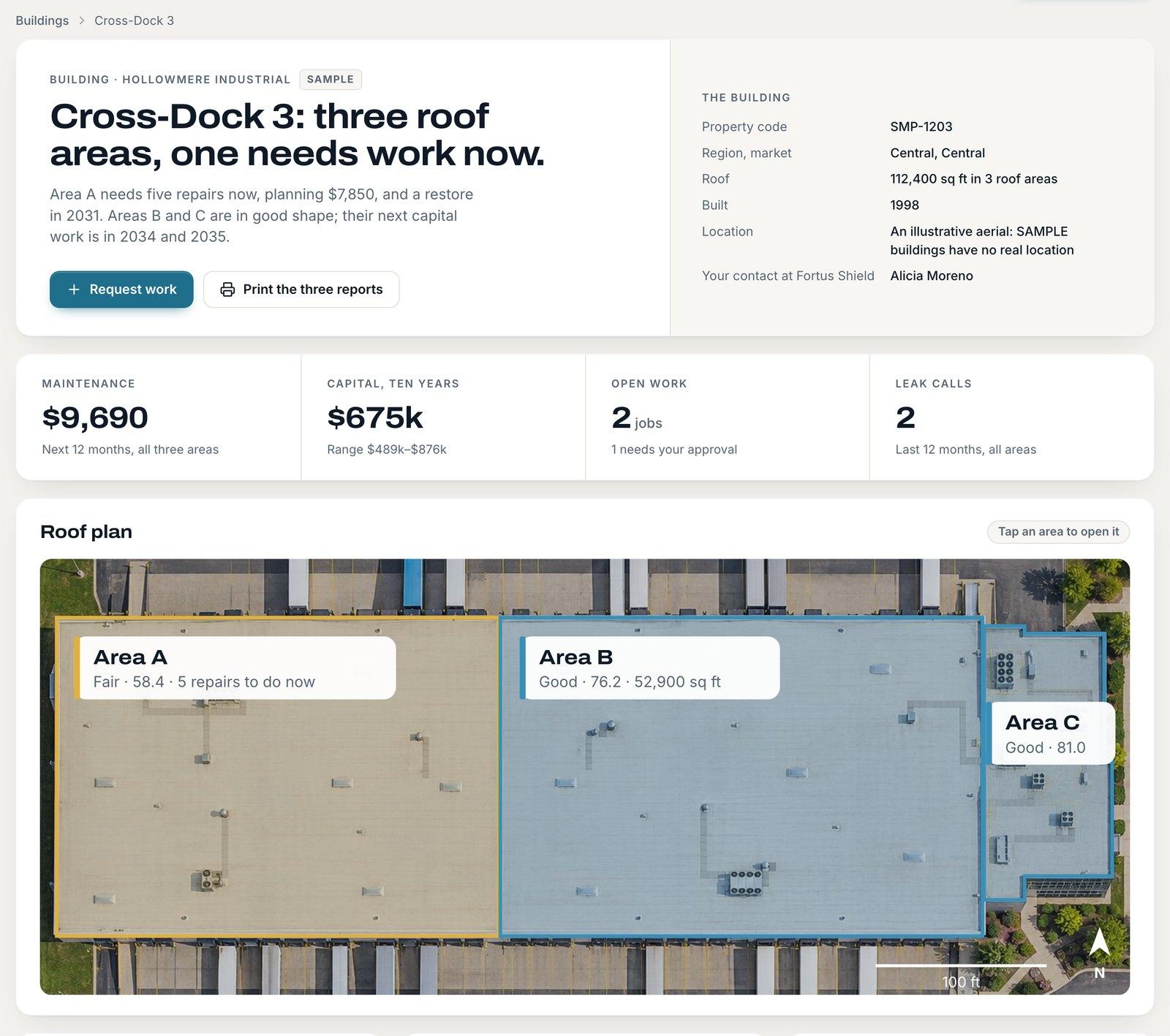
Every roof area, on the aerial.
Big buildings grow in phases, so one roof is often several: different systems, ages and warranties. We map each roof area on an aerial photo of the building and keep its record separately.
- Each finding pinned where it is, with its photos.
- Each roof area rated, budgeted and warrantied on its own.
- One building page that pulls them together.
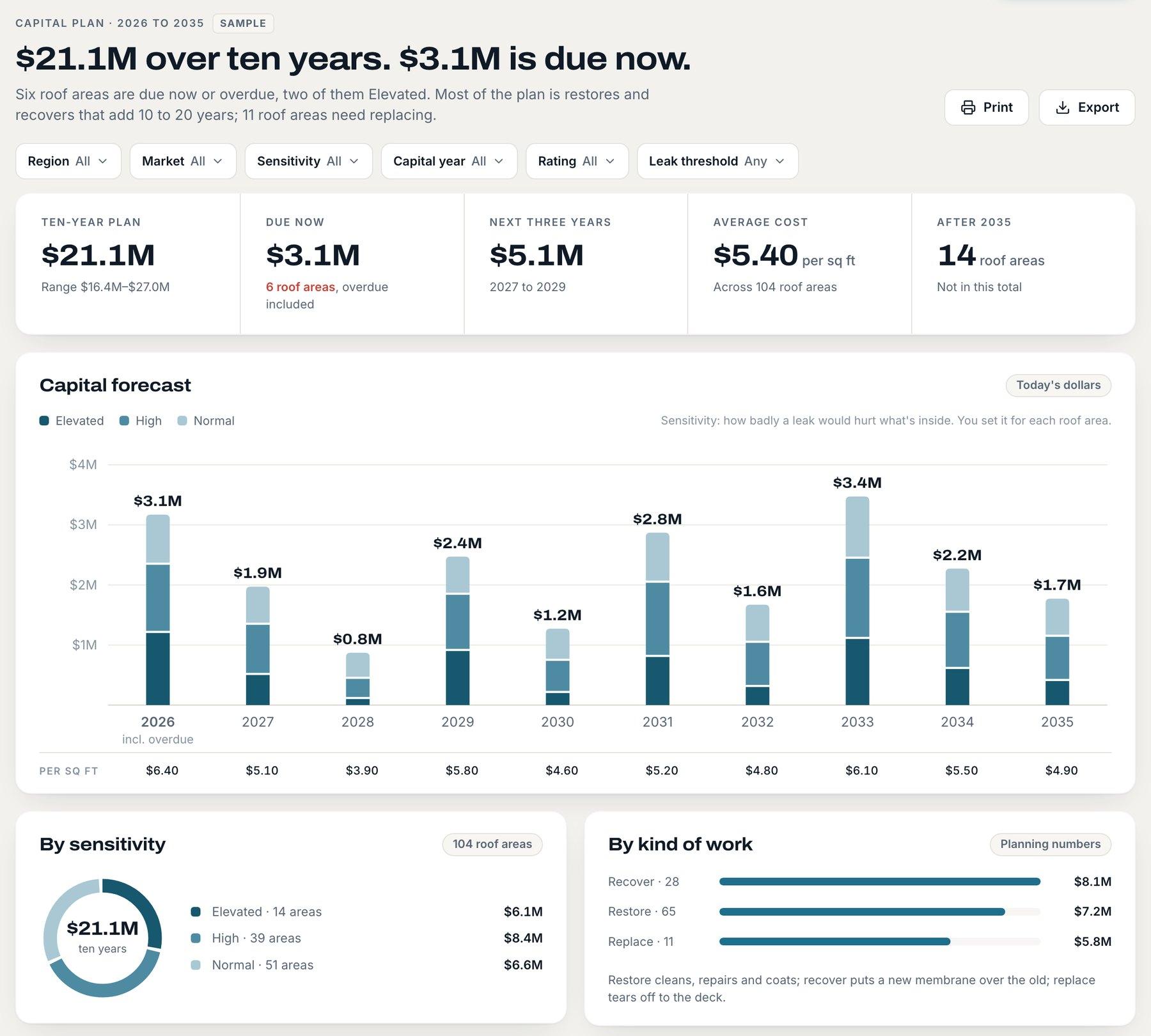
Plan the big spend years ahead.
On acres of roof, the choice between restoring, recovering and replacing is worth hundreds of thousands. The report sets the options side by side while there is still time to choose.
- Restore while the membrane can still take a coating.
- Recover once, if the roof qualifies and the insulation is dry.
- Replace only when it must, with ten years planned around it.
 SAMPLE
A leak over racking goes first.
Report it in the app or call us. We check the roof’s warranty, book a firm that is allowed to work on it, and make it safe first. The crew records what it found and what it did, with photos.
- Leak calls flagged against your own threshold for each roof area.
- Repeat leaks traced to their cause, not just patched.
One standard, every building.
The same visit, the same report and the same rating on every roof you own, so you can compare buildings and decide where the money goes first.
- Your property codes on every page and export.
- Your past reports loaded beside ours.
Do visits disrupt operations inside?
Visits happen on the roof, by appointment, through your roof hatch or ladder. If we need to see inside, for stains or an active leak, we arrange it with your site team first.
Our building has several roofs of different ages. How is that handled?
Each roof area gets its own rating, budget, warranty record and report, and a building page pulls them together.
Can you tell whether the insulation is wet?
A scan can flag areas that may be wet; a core cut confirms it. Until then, the area is shown to you as suspected, not as wet.
We have dozens of sites. Where do we start?
With the buildings and reports you already have. We load them first, then plan the visits by what matters most to you.
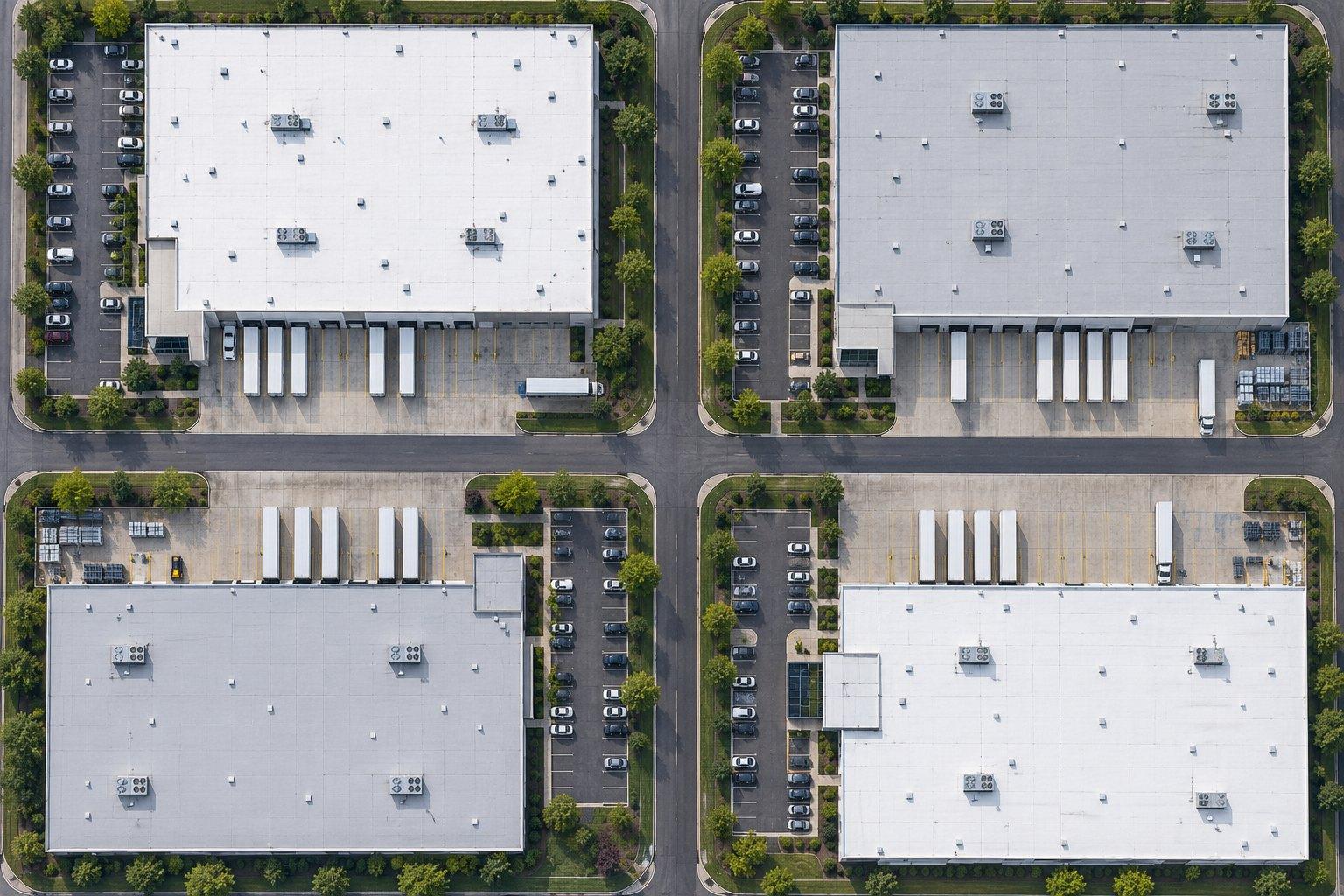
Let’s look at your roofs.
Tell us about your buildings and what you need, and we will come back to you to talk it through.