
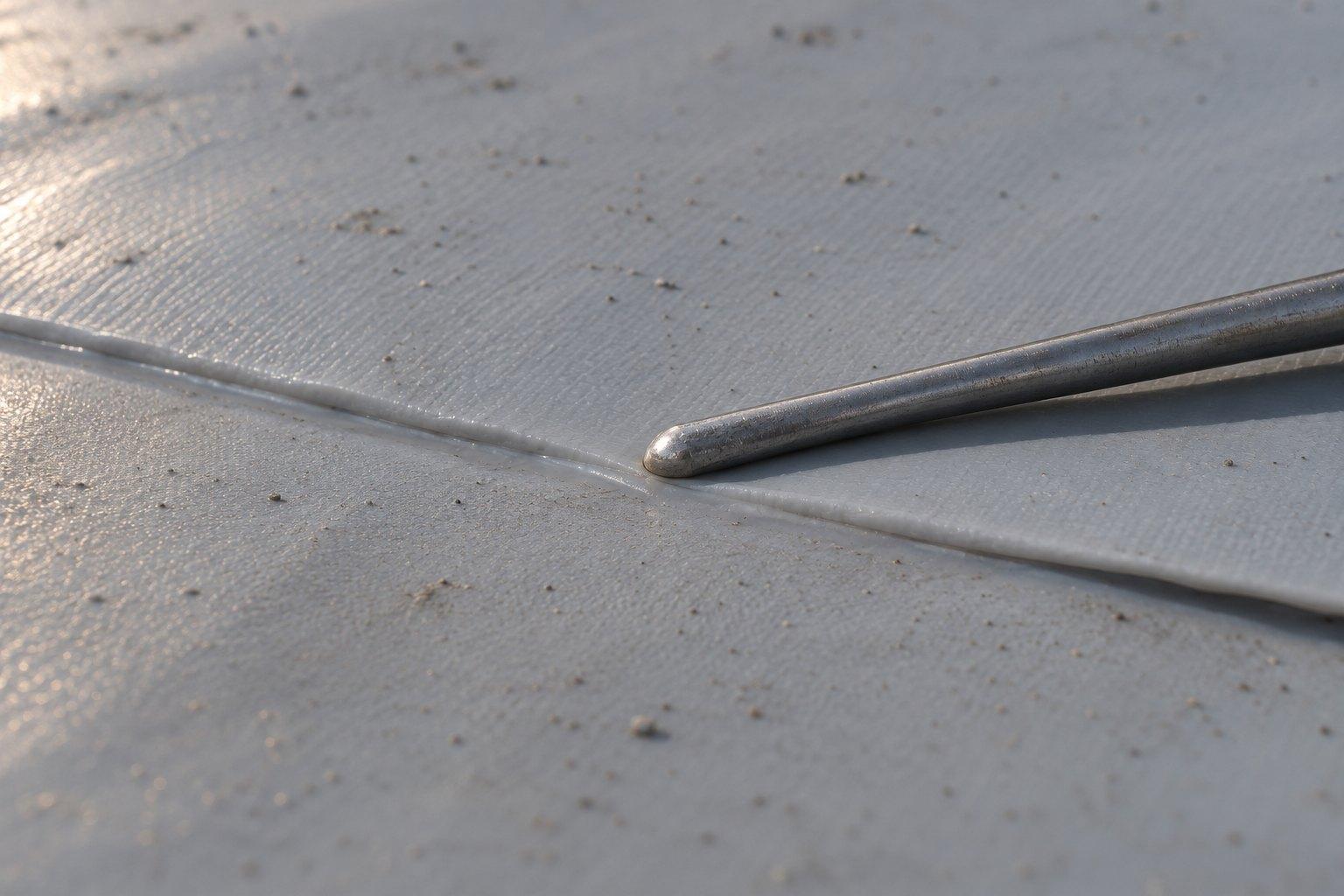
What a roof program is, and what to ask for.
A plain guide for owners and facility managers of commercial buildings: what a roof program does, what a good roof report holds, the words you will hear on a roof, and the questions worth asking.
Looking after roofs all year, not only when one leaks.
A roof program is a standing arrangement for every roof you own: a visit to each one every year, a report on its condition, repairs when they are needed, and a plan for the big spend years ahead.
Calling a roofer when it leaks.
- Problems are found once water is already inside.
- Each roofer’s report looks different, so roofs are hard to compare.
- The big spend arrives as a surprise.
- Warranty work is easy to miss, so repairs that should be covered get paid for.
A record and a plan for every roof.
- Problems are caught while they are small and cheap.
- The same visit, report and rating on every roof.
- Restoring, recovering or replacing, planned years ahead.
- Every repair checked against its roof’s warranty first.
Five things a roof report should hold.
Whoever looks after your roofs, these are worth expecting.
The words you will hear on a roof.
Most commercial buildings have a low-slope roof: one that looks flat but falls gently to its drains. These are the terms that come up when one is inspected, repaired or planned for.
The roof itself
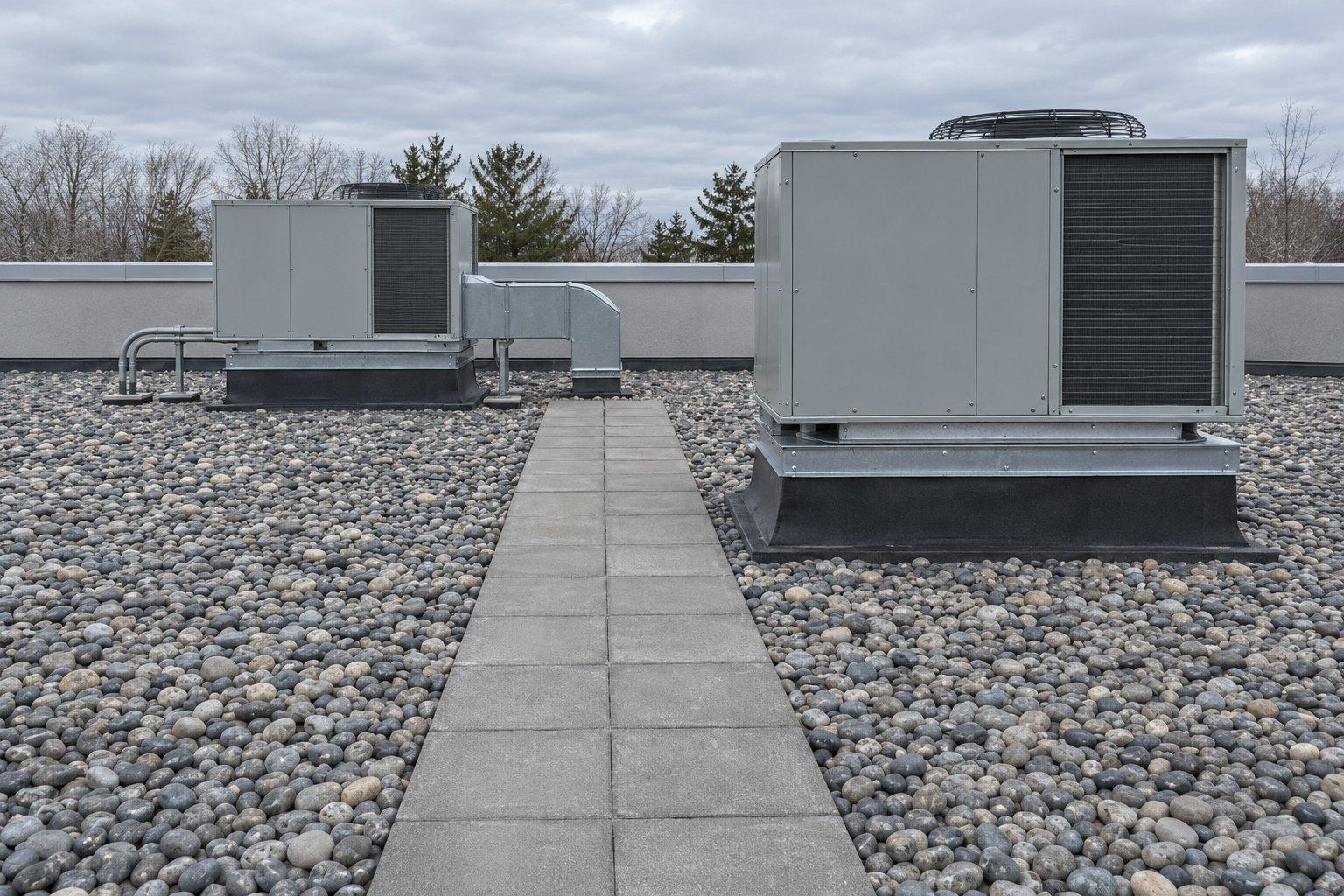
- Membrane
- The waterproof layer on top: sheets, layers of felt and asphalt, or a coating.
- Single-ply
- A membrane laid in wide sheets joined at the seams: TPO and PVC, usually white, or EPDM, usually black.
- Built-up roof
- Layers of felt and asphalt, often finished with gravel. Common on older buildings.
- Modified bitumen
- Asphalt-based sheets, often with a granule surface, laid in one or two layers.
- Ballast
- Stone or pavers laid over a loose membrane to hold it down.
- Insulation and deck
- The boards under the membrane, and the steel, concrete or wood structure they sit on.
Where leaks start
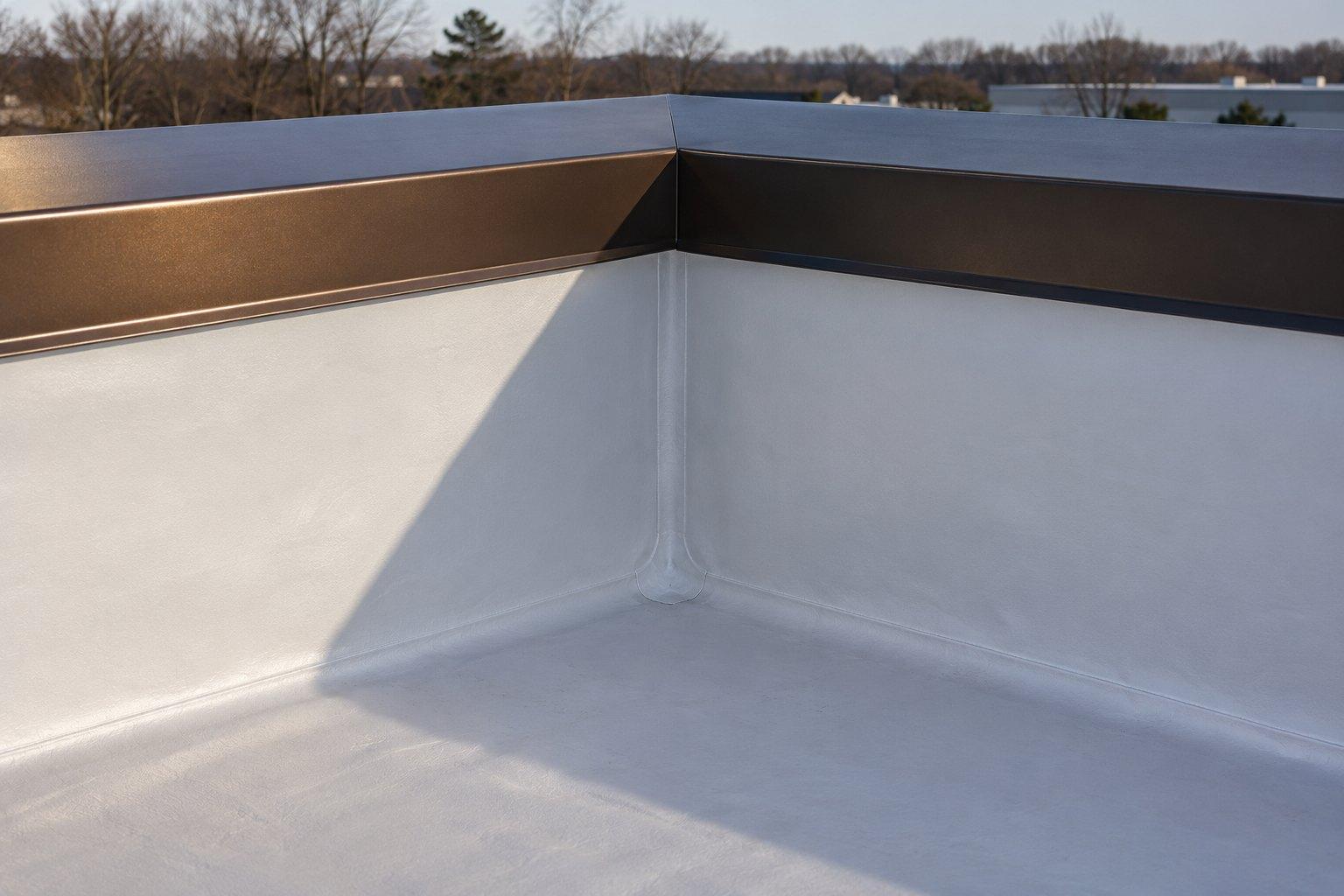
- Flashing
- Membrane or metal that seals the roof where it meets something: a wall, a curb, a pipe or an edge.
- Base flashing and counterflashing
- The base flashing turns up a wall or curb; the counterflashing is the metal over its top that sheds water.
- Curb
- The raised frame a rooftop unit or hatch sits on.
- Penetration
- Anything that passes through the roof: pipes, vents, conduit and supports.
- Pitch pan
- A metal pan filled with sealer around a penetration. The sealer shrinks and cracks with age.
- Lap seam and fishmouth
- A lap seam is where two sheets overlap and are joined; a fishmouth is a wrinkle at its edge that opens and lets water in.
- Ponding
- Water that stays on the roof long after rain. It adds weight and wears the membrane.
- Drain, scupper, parapet and coping
- Drains take water down through the building and scuppers out through the edge; a parapet is the low wall around a roof, and the coping is its cap.
Moisture and the work
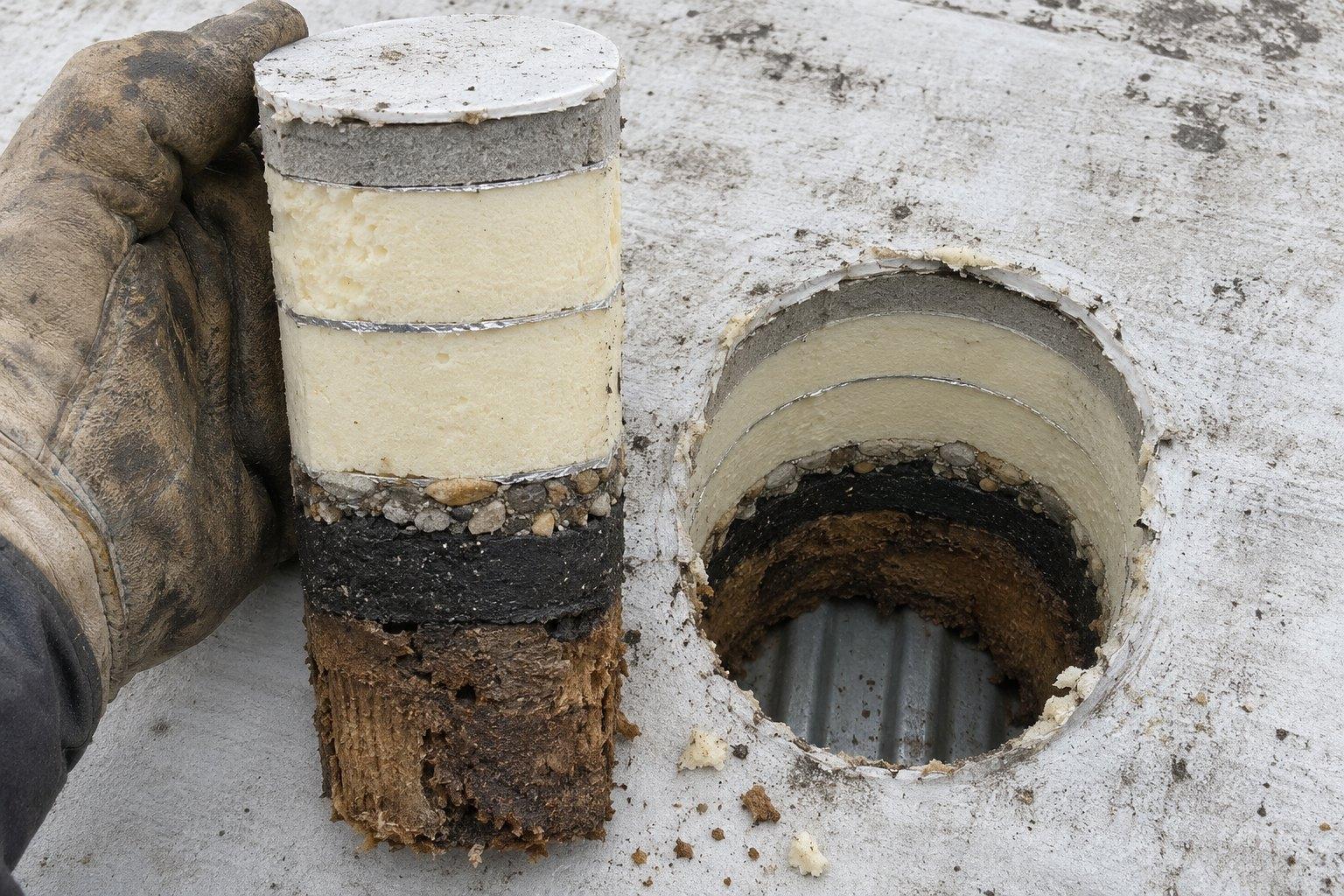
- Wet insulation
- Insulation that has taken on water. How much of it there is often decides between restoring and replacing.
- Infrared scan
- A thermal camera survey, usually flown at night, that flags areas that may be wet. It suggests; it does not confirm.
- Core cut
- A small sample cut through the roof to see its layers. It confirms whether the insulation is wet.
- Make-safe
- A quick, temporary repair that stops water until the proper repair can be made.
- Restore
- Clean, repair and coat a membrane that is aged but still sound and dry.
- Recover and replace
- A recover lays a new membrane over the old one, usually allowed once; a replacement tears the roof off to the deck.
Plans and warranties

- Roof area
- A part of a roof with one system, one age and one warranty. Many buildings have several, each with its own record.
- Remaining life
- An estimate of the years before a roof area needs restoring, recovering or replacing.
- Capital plan
- A year-by-year plan of the big roof spending to come, across all your buildings.
- Manufacturer’s warranty
- The membrane maker’s promise to repair leaks for a set term, as long as its terms are kept.
- Workmanship warranty
- The installing contractor’s promise to fix its own work, usually for a shorter term.
- Notice period and authorized contractor
- How soon a leak must be reported to keep a warranty, and the firms its maker allows to work on the roof.
Who walks the roof, and who checks the report?
Both should be named on the report: the technician who walked the roof and the person who reviewed what they found.
Does the report say what is sound, or only what is wrong?
Every part of the roof should be checked and marked, so the report tells you what does not need money as well as what does.
How do you know whether the insulation is wet?
A scan can flag areas that may be wet; a core cut confirms it. A decision to replace should rest on confirmed moisture.
What happens when a roof under warranty leaks?
The warranty’s terms come first: who must be told, how soon, and which firms are allowed to work on the roof.
Will my past reports carry over?
They should, kept exactly as they were printed, so the history of each roof stays in one place.
Can I see every building in one place?
Look for one dashboard across your portfolio, with each roof area’s report, photos and plan a click away.
Let’s look at your roofs.
Tell us about your buildings and what you need, and we will come back to you to talk it through.