
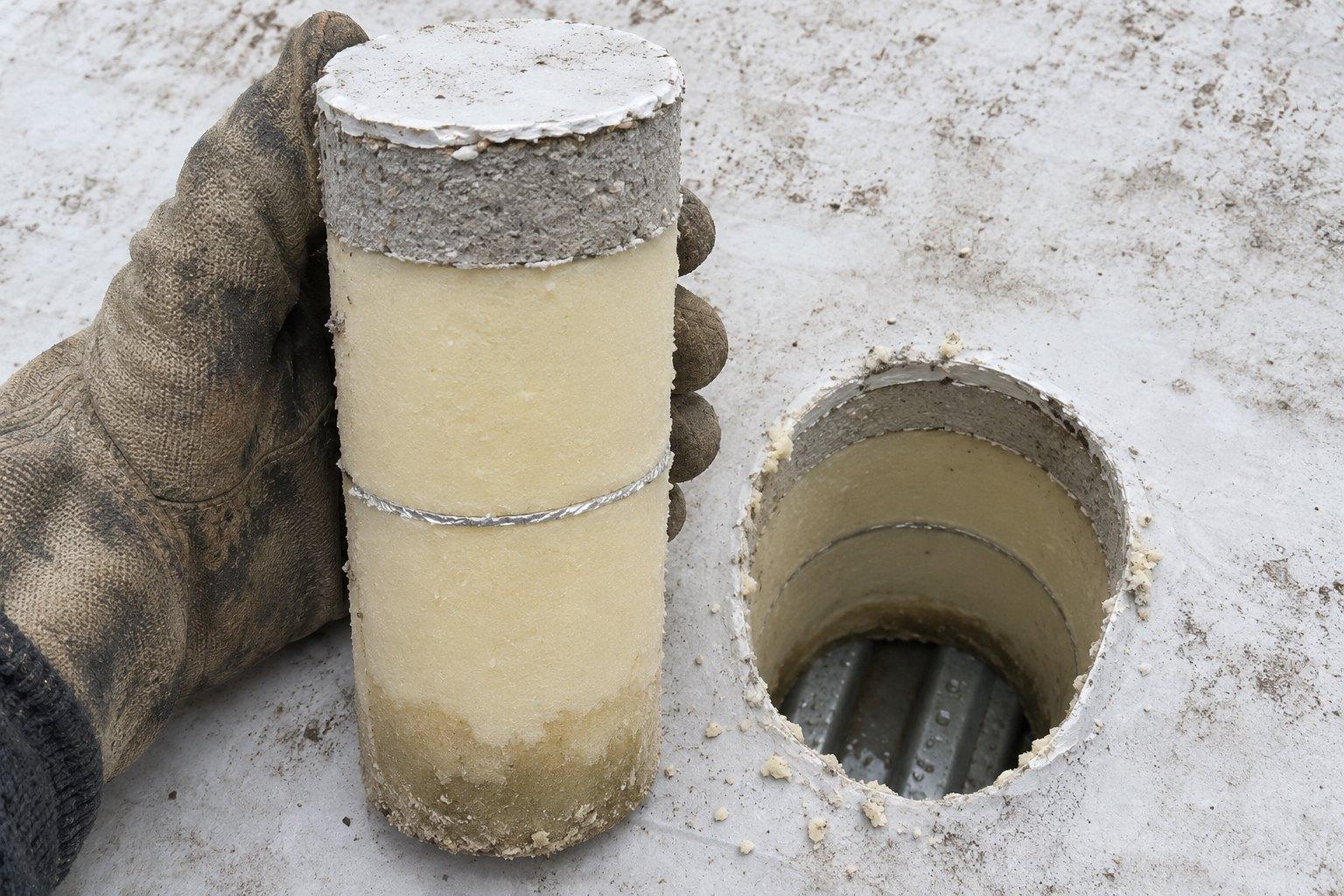
Every number shows its working.
A rating, a remaining life or a budget is only useful if you can see how it was reached. Here is how we reach ours, and where a person, not software, makes the call.
Five familiar bands over a 0–100 index.
Each roof area gets an index from 0 to 100 and the band it falls in. The person who walked the roof makes the final call; if it lands more than one band from the computed one, the report says why.
| Band | Index | What it usually means |
|---|---|---|
| Excellent | 86 to 100 | Maintain it. |
| Good | 71 to 85 | Repair what is found, and maintain it. |
| Fair | 51 to 70 | Repair, or restore while it still can be. |
| Poor | 31 to 50 | Recover it if it qualifies; otherwise plan to replace it. |
| Bad | 0 to 30 | Replace it; only emergency repairs until then. |
| Needs inspection | No index | No report published in the last 24 months. |
See what pulled a roof down.
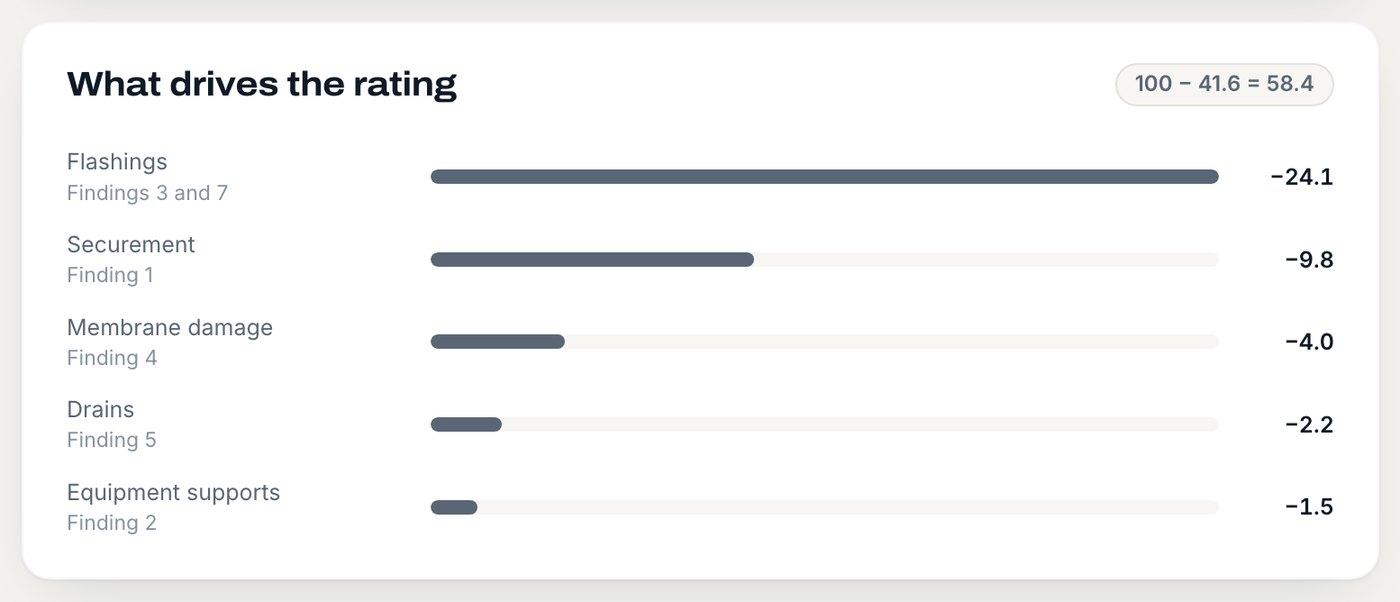
The index starts at 100. Each deduction is tied to the findings behind it, so you can see which parts of the roof cost the most points.
- Every deduction names its findings.
- Each finding has photos and a place on the roof plan.
- The sum is shown: 100, less the deductions.
 SAMPLE
 SAMPLE
Ranges, with one number to plan with.
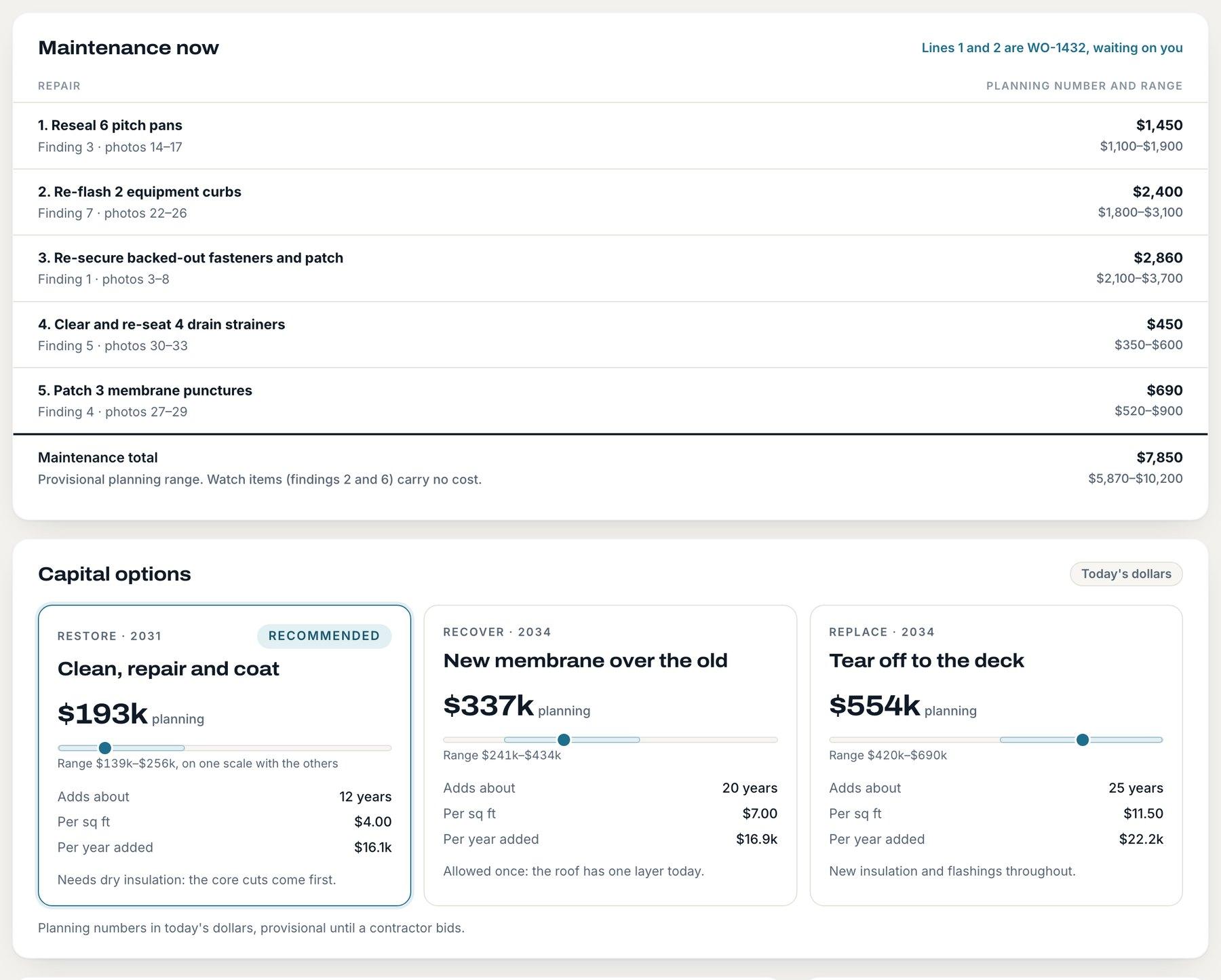
Remaining life, maintenance and capital each come as a range. Beside each range sits one planning number for your budget, and the report lists the assumptions behind it.
- Our calculations set every number, not AI.
- Each repair line points to its findings and photos, and the lines add up to the total.
- Planning numbers are in today’s dollars until a contractor bids.
Repair, restore, recover or replace.
When a roof needs more than repairs, the report sets the options side by side, with the years each one adds and what it costs per year added.
Repair
Fix the defects found. Keeps a sound roof sound.
Restore
Clean, repair and coat the existing membrane, while the roof is dry and still in fair shape.
Recover
A new membrane over the old one. Usually allowed once, and only over dry insulation.
Replace
Tear off to the deck and start again, with new insulation and flashings.
Confirmed, not guessed.
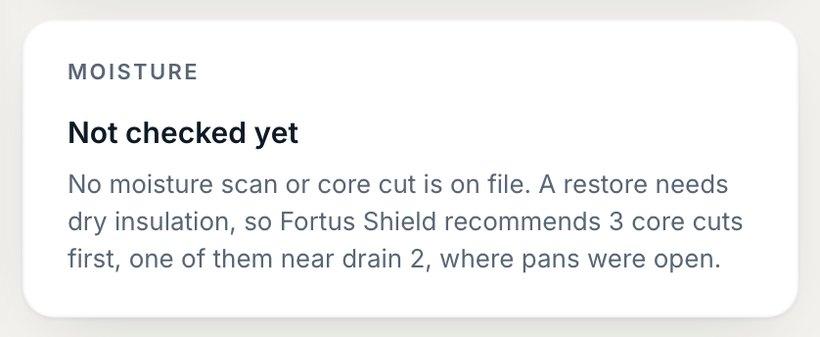
Wet insulation decides whether a roof can be restored or recovered, so we never infer it from a photo. A scan can only mark an area as suspected; a core cut confirms it. Suspected areas are shown to you, labeled, with what it would take to confirm them.
AI drafts. People decide.
AI suggests photo captions and findings for the technician and the reviewer to accept or change. It never sets a rating, a budget or a price, never decides that insulation is wet, and never names a cause such as hail.
- What AI suggested and what a person decided are both kept.
- A report can be made with suggestions switched off.
- No report reaches you until a named reviewer publishes it.
Who was on your roof, and for how long.
Every report carries a short record of how it was made: who walked the roof and when, how long they were up there, how many photos were placed on the plan, who reviewed it and how many changes they made, and anything that could not be seen.
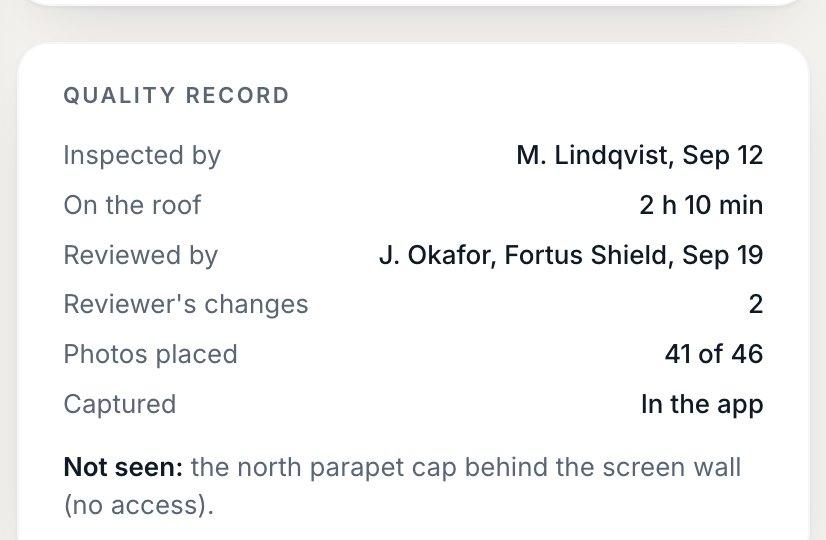 SAMPLE
Let’s look at your roofs.
Tell us about your buildings and what you need, and we will come back to you to talk it through.